
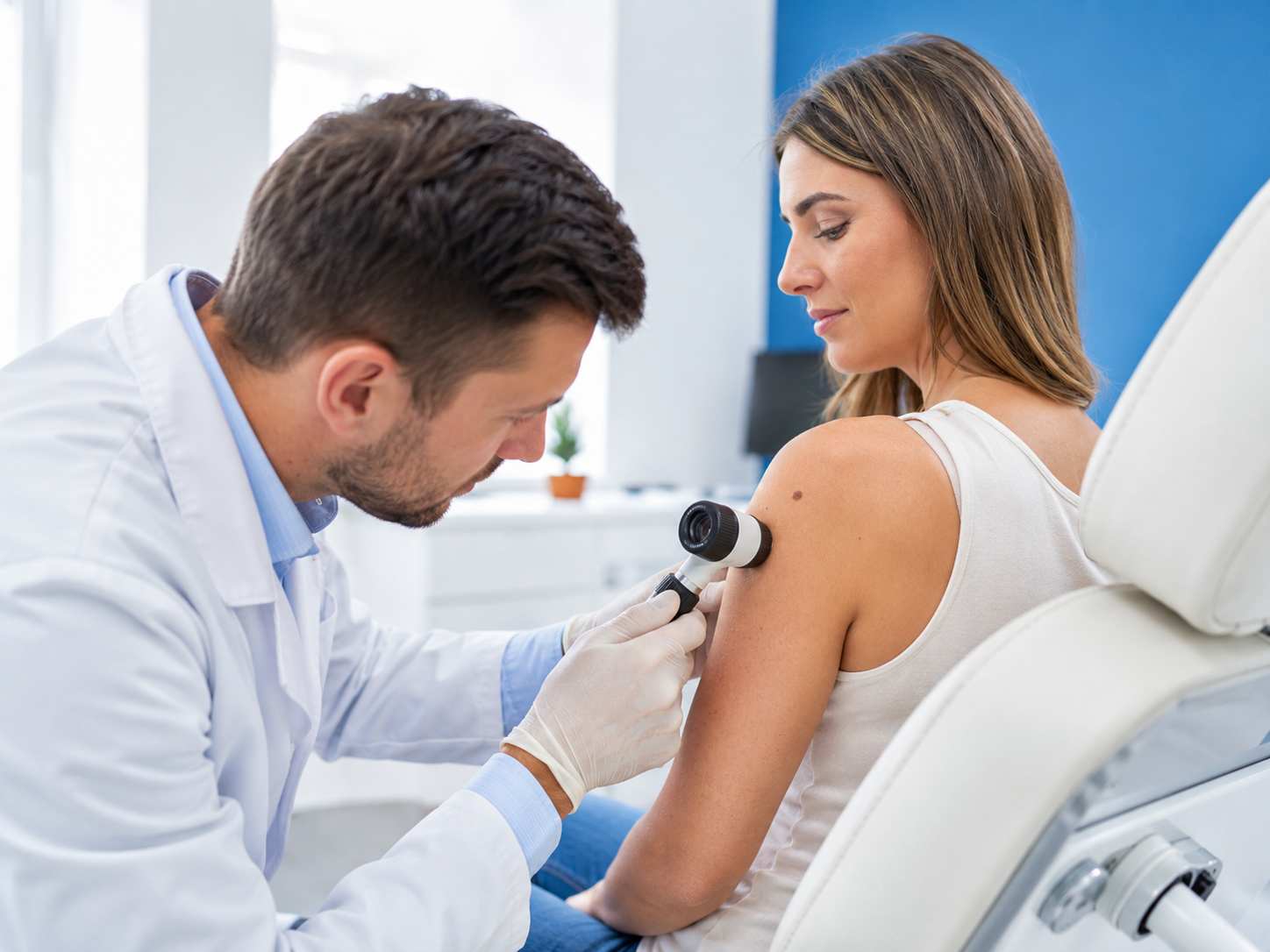
Skin cancer can be itchy or painful, but many skin cancers do not feel different at all. A mole, spot, sore, lump, or scaly patch does not need to hurt before getting it checked by your GP.
The safer question is not only “does it itch or hurt?” but “is it new, changing, bleeding, crusting, scaly, not healing, or different from the rest of my skin?” Pain and itch are warning signs, not proof, and the absence of pain or itch does not rule out skin cancer.
Is Skin Cancer Itchy?
Yes, skin cancer can be itchy, but an itch alone does not mean cancer.
The medical term for itch is pruritus. It becomes more concerning when it keeps happening in the same spot or appears with a visible change in the skin. A random itch that moves around the body is usually different from one mole, sore, lump, or scaly patch that keeps itching in the same place.
An itchy mole or itchy skin lesion needs a GP check when it:
- keeps itching for weeks
- bleeds or crusts
- becomes scaly or rough
- changes colour, size, shape, or texture
- does not heal
- looks different from nearby moles or spots
According to PubMed Central’s research on Pain & Itch’s Association With Skin Cancer, itch is found in a meaningful number of confirmed skin cancer lesions, especially in non-melanoma skin cancers such as squamous cell carcinoma and basal cell carcinoma.
Does Skin Cancer Hurt?
Yes, some skin cancers hurt, but many do not. Skin cancer pain can feel like tenderness, soreness, burning, stinging, throbbing, or pain when the spot is touched.
A painful mole or skin lesion is not automatically cancerous. It can be irritated, scratched, inflamed, infected, or rubbed by clothing. But pain becomes more concerning when the same spot is also growing, bleeding, crusting, scabbing, reopening, or changing in colour, size, shape, or texture.
Many melanomas do not hurt in the early stages, so a painless changing mole still needs a GP review. A spot does not need to be painful to deserve attention.
What Are the Symptoms of Skin Cancer?
Skin cancer symptoms can include new spots, changing moles, non-healing sores, bleeding lesions, crusted patches, scaly areas, pearly lumps, painful spots, itchy lesions, or skin growth that looks different from the rest of your skin. However, not every symptom means cancer. Many skin changes are caused by dry skin, eczema, dermatitis, infection, friction, insect bites, or harmless growths. But if a spot is persistent, changing, bleeding, painful, itchy, crusted, or not healing, it needs a proper GP check.
1. A New Mole, Spot, Lump, or Skin Growth
You know your skin better than anyone. If a new mole, spot, lump, or skin growth appears and does not go away, pay attention to it. It does not automatically mean skin cancer, but it is worth checking if it keeps growing, becomes raised, changes colour, starts bleeding, feels itchy or sore, or looks different from the surrounding skin.
2. A Mole That Changes Colour, Size, Shape, Border, or Thickness
A mole that slowly becomes darker, larger, thicker, uneven, raised, or irregular in shape around the edges needs a GP review. You do not need to wait for it to hurt. If the mole is changing, that change itself is enough reason to get it checked.
3. A Sore That Does Not Heal
Most small cuts, scratches, and scabs improve with time. But if you have a sore that keeps reopening, bleeding, crusting, or looks almost healed but never fully heals, do not ignore it. This is especially important in areas that get a lot of sun, like your face, ears, scalp, lips, hands, arms, and shoulders.
4. A Spot That Bleeds, Crusts, Scabs, or Becomes Tender
A spot that bleeds once after you scratched it is different from one that keeps bleeding or crusting for no clear reason. If the same area repeatedly forms a scab, feels tender, becomes sore, or opens up again after healing, it needs proper assessment. The pattern matters more than a one-off irritation.
5. A Rough, Scaly, Red, Pale, or Pearly Patch
Not every rough or scaly patch is serious. Dry skin, eczema, and irritation are common. But if one patch keeps coming back, feels rough no matter what you apply, becomes red, pale, shiny, pearly, thickened, or starts to bleed, it should be checked. Skin cancer does not always look like a dark mole; sometimes it looks more like a stubborn patch of damaged skin.
6. A Mole or Lesion That Keeps Itching, Hurting, Burning, or Stinging
An itchy or painful spot is not automatically cancer, but it’s a sign that your skin is trying to get your attention. If the same mole, sore, patch, or lump keeps itching, hurting, burning, stinging, or feeling tender, especially with visible change, book a GP check. The feeling alone does not diagnose anything, but a spot that both looks different and feels different needs a checkup.
7. A Spot That Looks Different From Your Other Moles or Skin Marks
If one spot stands out, do not dismiss it. It might be darker, lighter, larger, more raised, oddly shaped, or unlike the rest of your moles and freckles. Doctors sometimes call this the “ugly duckling” sign. You do not need to know what it is before seeing a GP; you only need to notice that it looks different and have it checked.
What Else Can Cause Itchy or Painful Skin?
Most itchy or painful skin changes are not skin cancer, but when the symptom keeps returning in the same place, their cause still needs to be found to feel comfort. Many everyday skin problems can itch, burn, sting, feel tender, or become irritated, especially when the skin is dry, inflamed, infected, scratched, or rubbed by clothing.
Common causes include:
- dry skin
- eczema
- psoriasis
- dermatitis
- insect bites
- allergies
- infection
- friction
- wounds
- cysts
- inflamed hair follicles
- benign moles or warts
The reason to see a GP is not that every itchy spot is dangerous. The reason is that persistent, changing, bleeding, crusted, painful, scaly, or non-healing spots need proper assessment.
How Does a GP Check an Itchy or Painful Spot?
A GP checks an itchy or painful spot by looking at how it feels and how it behaves over time. Itch and pain are useful clues, but they are not enough on their own, so the GP will also look at the colour, size, shape, border, texture, bleeding, crusting, healing pattern, and whether the lesion looks different from nearby moles or skin marks.
They look at the spot, ask how it has changed, check your risk factors, and decide whether it needs monitoring, dermoscopy, biopsy, removal, referral, or follow-up.
The GP may ask:
- When did it start?
- Has it changed in colour, size, shape, or texture?
- Does it itch, hurt, burn, bleed, crust, or scab?
- Does it heal and come back?
- Have you had skin cancer before?
- Do you have a family history of melanoma or skin cancer?
- Has the area had heavy sun exposure?
The doctor may examine the lesion with a dermatoscope, measure or photograph it, compare it with nearby moles, and explain the next step.
When Should You Not Wait to Get It Checked?
Do not wait to get a skin spot checked when it is changing, persistent, bleeding, crusted, painful, itchy, or not healing. Skin changes do not need to look dramatic before seeing a doctor; a small mole, sore, scaly patch, or lump can still need review if it keeps changing or refuses to settle.
Get it checked if:
- the spot is growing quickly
- a mole changes colour, size, shape, border, or thickness
- it bleeds without being scratched
- it crusts, scabs, heals, then comes back
- it hurts or itches repeatedly in the same place
- it becomes tender, red, swollen, or inflamed
- it looks very different from your other moles
- it does not heal after a few weeks
- you have past skin cancer or strong family history
For a changing mole, the worst thing you can do is wait until it becomes painful before getting it checked. Pain, itch, bleeding, and crusting can help you notice a problem, but change is often the stronger warning sign.
Got an Itchy or Painful Spot? Get It Checked by a GP.
If a skin spot itches, hurts, bleeds, crusts, or changes, don’t just keep watching it without a plan. Have a GP check your skin rather than guessing whether it is a harmless skin change, an allergy, or something more serious.
A skin cancer check can help determine whether the spot needs monitoring, dermoscopy, biopsy, removal, referral, or follow-up. The goal is not to assume the worst, but to properly assess the change and act early if needed.
FAQs
How do you know if itchy skin is cancer?
You cannot know from itching or pain alone. But when it stays in one spot and appears alongside a mole, sore, lump, scaly patch, bleeding area, crusted skin, non-healing wound, or changing lesion, it’s a sign of a skin problem that must be checked.
What are the 7 warning signs of skin cancer?
Warning signs of skin cancer are a new mole or spot, a changing mole, a sore that does not heal, bleeding or crusting, a rough or pearly patch, a spot that keeps itching or hurting, and a mole or mark that looks different from the rest of your skin.
How can you tell if a spot is skin cancer?
You cannot confirm skin cancer by looking at a spot yourself. A GP or skin cancer doctor needs to examine it before any sort of confirmation. They will decide whether it needs monitoring, dermoscopy, biopsy, removal, pathology testing, referral, or follow-up.
At what stage does skin cancer itch?
Skin cancer does not itch at one fixed stage. Some lesions itch early, some itch later, and many never itch at all. Itchiness matters more when it is persistent, localised, and accompanied by bleeding, crusting, scaling, thickening, inflammation, colour change, or a sore that does not heal.
Is skin cancer itchy?
Skin cancer can be itchy, but an itch alone does not mean cancer. A persistent itchy spot, especially one that is changing, bleeding, crusting, scaly, or not healing, should be checked by a GP.
Does skin cancer hurt?
Some skin cancers hurt, feel tender, burn, or sting, but many do not hurt at all, especially in the early stages. That is why a painless change in a mole or a new spot still needs to be checked.
What does skin cancer pain feel like?
Skin cancer pain can feel like tenderness, soreness, burning, stinging, throbbing, or pain when the spot is touched. The appearance and behaviour of the lesion matter more than the exact type of pain.
Is melanoma itchy or painful?
Melanoma often starts as a visible change in a mole or a new spot and is often not painful early on. It can itch, bleed, become tender, or hurt as it changes or progresses.
Is a painful or itchy mole always cancer?
No, a painful or itchy mole is not always cancer. It can be irritated, scratched, inflamed, infected, or rubbed by clothing. But a mole that keeps hurting, changes, bleeds, crusts, or looks different should be checked.
What skin symptoms should a GP check?
A GP should check new spots, changing moles, non-healing sores, bleeding lesions, crusted or scaly patches, painful or itchy spots, pearly lumps, rough red patches, and spots that look different from your other moles.
Can skin cancer feel like a burning sensation?
Some skin cancers can cause burning, stinging, tenderness, or irritation. Burning alone does not diagnose skin cancer, but a burning spot that also changes, bleeds, crusts, or fails to heal requires medical review.


Comments are closed