
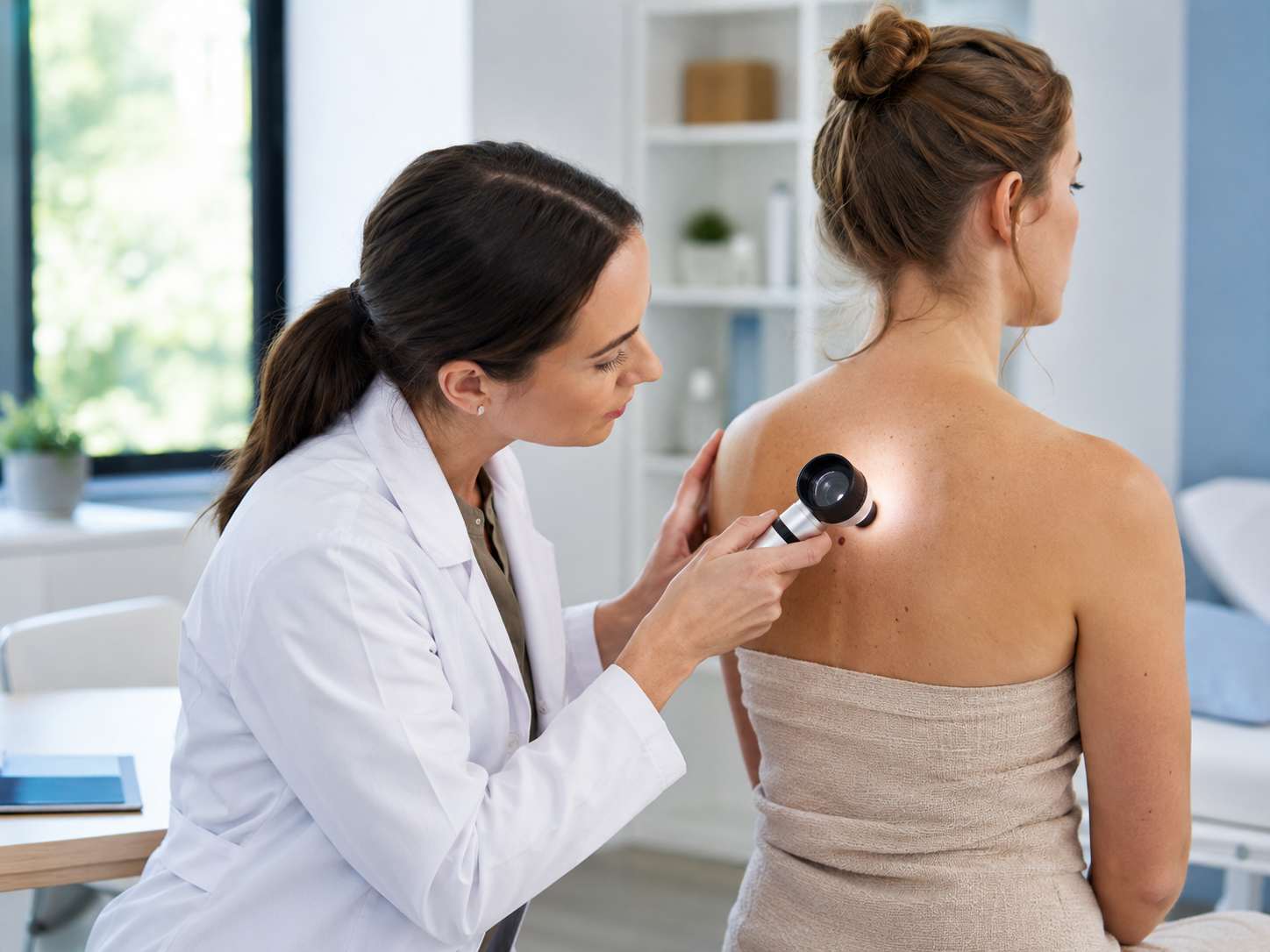
During a full-body skin check, the doctor will ask about your skin history, check your moles, spots, freckles, lesions, and sun-damaged areas, then examine suspicious spots more closely with a dermatoscope.
The goal is simple: to look for early signs of skin cancer, including melanoma, basal cell carcinoma, squamous cell carcinoma, and other suspicious skin changes. At the end, your GP or skin cancer doctor explains whether everything looks fine, whether a spot needs monitoring, or whether you need a biopsy, removal, referral, or follow-up.
You usually undress to your undegarments, but the appointment is private, professional, painless, and focused only on your skin. In Australia, doctors will avoid direct physical contact whenever possible.
What Is a Full Body Skin Check?
A full body skin check is a systematic head-to-toe skin examination performed by a GP, skin cancer doctor, or trained medical professional.
It is not just a quick mole check. The doctor looks across your skin for new spots, changing moles, unusual lesions, crusty sores, scaly patches, pearly lumps, bleeding areas, and spots that look different from the rest of your skin.
The purpose is to find suspicious skin changes early and decide what happens next, whether that is reassurance, monitoring, photography, biopsy, removal, referral, or follow-up.
What Happens Before the Skin Check Starts?
Before the examination starts, the doctor asks about your skin cancer risk and any spots you are worried about.
They may ask about:
- personal history of skin cancer
- family history of melanoma or skin cancer
- past sunburns
- outdoor work or high UV exposure
- solarium use
- fair skin, light eyes, red hair, or fair hair
- many moles or atypical moles
- weakened immune system
- spots that have changed, bled, itched, crusted, or failed to heal
This first part helps the doctor understand where to pay closer attention. Bring photos if a mole or spot has changed over time.
Do You Have to Undress for a Full Body Skin Check?
Yes, for a full body skin check, you are usually asked to undress to your underwear. This helps the doctor check areas that are commonly exposed to the sun, areas you cannot easily see yourself, and areas where skin changes can be missed. A gown, sheet, or blanket is typically provided.
The doctor is checking your skin, not judging your body, grooming, scars, tattoos, stretch marks, or weight. You are allowed to say if you feel uncomfortable at any point. The doctor should explain the process before starting, and you have the right to agree to or decline any part of the check.
Which Areas Does the Doctor Check?
During a full-body skin check, the doctor examines visible skin areas from head to toe. This can include:
- face
- ears
- neck
- scalp
- shoulders
- chest
- back
- arms
- hands
- fingers
- legs
- feet
- toes
- palms
- soles
- nails
- previous skin cancer sites
Commonly missed areas like the scalp, palms, soles, nails, and sites of prior skin cancer can also be checked during a skin cancer assessment. Private areas are not routinely checked at every skin check. If you have a spot under your underwear or in a private area, tell the doctor so it can be checked respectfully and with consent.
What Is the Doctor Looking For?
The doctor is looking for patterns, changes, and outliers across your skin. They check for:
- new spots
- moles changing colour, size, shape, or thickness
- crusty sores that do not heal
- red, pale, or pearly lumps
- scaly patches
- bleeding or itchy lesions
- tender or inflamed spots
- spots that look different from your other moles
- signs of melanoma, basal cell carcinoma, or squamous cell carcinoma
Your doctor may also ask you to observe and report crusty sores that do not heal, changes to the colour, size, shape, or thickness of moles and freckles, new spots, and small lumps that are red, pale, or pearly.
The most important spot is not always the one you notice first. That is why a full-body skin check can be more useful than checking only one mole.
How Long Does a Full Body Skin Check Take?
Most full-body skin checks take about 15 to 30 minutes, depending on your skin, risk factors, and how many spots need closer review. If you only need a single spot checked, it takes shorter than a full-body skin cancer screening. However, it takes longer if you have:
- many moles
- past skin cancer
- several suspicious spots
- strong family history
- sun-damaged skin
- spots that need measurement, photography, or detailed discussion
What Happens If the Doctor Finds a Suspicious Spot?
If a suspicious spot is found, the doctor may remove it, take a small sample for lab testing, or refer you to a dermatologist. A suspicious spot is not automatically skin cancer, but it does need a clear plan. Depending on what the doctor sees, the next step may be to:
- monitor the spot
- photograph or measure it
- review it again later
- perform or arrange a biopsy
- remove the lesion
- send a sample to pathology
- refer you to a dermatologist or specialist
If skin cancer is found, the doctor will explain your treatment options and what to do next. If further referral to a specialist is needed, they will do it.
What Should You Do After the Skin Check?
What you do after the skin check depends on the results. There are 3 possibilities:
- If nothing suspicious is found, ask when you should return for your next skin check.
- If something is being monitored, ask what changes to watch for.
- If a biopsy, removal, or referral is needed, make sure you understand the timing and next appointment.
After a skin cancer check, the doctor will usually talk through the results, explain the biopsy if needed, discuss treatment options if skin cancer is found, and advise when to return if nothing suspicious is found.
A clear skin check does not mean you stop watching your skin. Keep checking for new or changing spots between appointments.
How to Prepare for a Full Body Skin Check?
Before your skin check, do these to make the appointment smoother:
- wear clothing that is easy to remove
- wear comfortable underwear
- remove makeup where possible
- remove nail polish if you can
- avoid fake tan before the appointment
- avoid heavy moisturiser over suspicious spots
- write down spots you want checked
- bring photos of changing spots if you have them
- know your personal and family skin cancer history
- mention any private-area spot you want checked
Also, make notes of what to tell the doctor if a mole, freckle, lump, sore, scab, or patch has changed recently. Small details like itching, bleeding, crusting, tenderness, growths, colour changes, or shape changes matter.
What Tools Are Used During a Full Body Skin Check?
The doctor first visually examines your skin. If a mole, spot, or lesion needs a closer look, a dermatoscope is used, which is a handheld tool with light and magnification that lets doctors see skin texture and structures that are not visible to the naked eye. The tool does not cut or hurt the skin.
The doctor may also:
- measure a spot
- photograph a mole for comparison
- record the location of a lesion
- compare similar moles
- recommend monitoring
- arrange biopsy, excision, pathology, or referral
FAQs
What happens during a full-body skin check?
A GP or skin cancer doctor asks about your skin history and risk factors, checks your skin from head to toe, examines suspicious spots with a dermatoscope where needed, and explains whether anything needs monitoring, biopsy, removal, referral, or follow-up.
Do I have to undress for a skin check?
Yes, you are typically asked to undress to your underwear for a full-body skin check. A gown or sheet may be provided, and you can say no to any part of the examination.
What areas are checked during a full-body skin check?
The doctor checks visible skin areas, including the face, ears, neck, scalp, chest, back, arms, hands, legs, feet, toes, palms, soles, nails, and previous skin cancer sites. If you have a concerning spot under your underwear or in a private area, tell the doctor.
How long does a full-body skin check take?
Most full-body skin checks take about 15 to 30 minutes. It can take longer if you have many moles, a history of skin cancer, several suspicious spots, or areas that need closer review.
Does a Full Body Skin Check Hurt?
No, the examination itself is painless because the doctor only looks at your skin with the naked eye or a dermatoscope, with no intrusive contact (cuts, scrapes, stabs, etc.). If the doctor recommends a biopsy, excision, or removal after the checkup, those parts may hurt a bit. But before such procedures, the doctor will explain why they are needed, what the procedures involve, and what happens to the sample before anything is done.
What happens if a suspicious mole is found?
The doctor may measure or photograph the spot, monitor it, perform or arrange a biopsy, remove it, send a sample to pathology, or refer you to a dermatologist or specialist.
Can I keep my underwear on during a skin check?
Yes, you can keep your underwear on during a full-body skin check. If you have a suspicious spot under it, tell the doctor so it can be checked respectfully and with consent.
What should I wear to a skin check?
Wear clothing that is easy to remove and comfortable underwear. Remove makeup, nail polish, and fake tan so the doctor can see your skin and nails clearly.


Comments are closed